
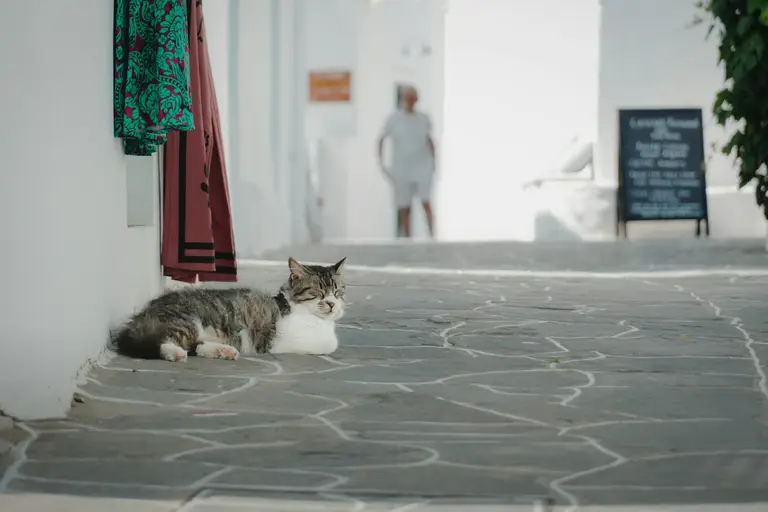
You have just spotted a cat alone near a building, in a garden or by the roadside. Start by watching without forcing contact. A found cat is not necessarily abandoned. It may have gone missing only recently, be used to going outside, or belong to a colony of free-roaming cats already monitored locally.
In short: check for a collar, note the place and time, then have a microchip or tattoo checked by a vet, a municipal pound or another competent organisation. If an identification number is known, report the cat as found to I-CAD. Contact the town hall of the municipality as well. A local alert helps, but it never replaces those official steps.
1. Tell a lost cat, a stray cat, a free-roaming cat and a kitten apart
Before deciding what to do, use the right words. They change what comes next.
Clearly lost cat: collar, tag, disoriented behaviour, unusual approach, or a sudden appearance in an area where it is not usually seen.
Stray cat: alone, with no clear keeper, sometimes hungry or fearful, but with no proof of abandonment.
Free-roaming / colony cat: often discreet, sometimes sterilised and monitored by an association or a local contact. A tipped ear (the tip cut) can indicate sterilisation within a colony programme.
Kitten: more fragile and more exposed. The priority is safety, warmth and quick contact with a professional or competent organisation.
Never conclude that a cat has been abandoned only because it is dirty, thin or without a collar. Many lost cats have no visible external marking.
2. Keep the situation safe without forcing the animal
The first rule is not to put yourself at risk and not to frighten the animal.
Observe from a distance: calm, injured, frightened, approachable or unreachable.
Keep dogs, children and noise away.
If the cat is calm and comes towards you, speak softly and avoid sudden movements.
Do not chase it up a tree, into a cellar or under a car. Panic increases the risk of escape or injury.
If it is on a road, prioritise traffic safety and contact the municipality or the relevant services rather than stepping into the roadway.
If it is injured, quickly ask a vet or the town hall how care should be organised.
If you can temporarily keep it safe without risk, a quiet, enclosed and ventilated space is enough to prevent another disappearance. Do not use dangerous restraint.
3. Record the place, time and distinguishing features
Even if the cat leaves, this information remains useful.
the exact place and direction of movement;
the time of the first and most recent sighting;
coat, size, apparent sex and distinctive marks;
whether there is a collar, a tag or identification that a professional can check;
behaviour: sociable, fearful, injured or impossible to approach.
Take a clear photograph if it is safe to do so. It will help compare missing-pet notices and share an accurate alert without forcing you closer to a frightened animal.
4. Check the cat's identification
Look at the collar and tag first. A phone number can resolve the situation within minutes. Also check, without forcing the animal, whether a tattoo is visible inside an ear.
The absence of a collar or visible tattoo does not mean the cat is unidentified. A microchip sits under the skin and needs a suitable scanner. A vet, municipal pound, equipped town hall or shelter can check it. I-CAD advises contacting one of these professionals when there is no visible marking.
Identification is the official link between the animal and its registered keeper. The French Ministry of Agriculture explains that identification is compulsory and helps professionals contact the family.
5. Report the found cat and contact the municipality
When the microchip or tattoo number is known, you can register a found-animal declaration with I-CAD. Your contact details can then be passed to the registered keeper without their personal data being disclosed directly to you.
Also contact the town hall of the municipality where the cat was found, or the municipal police if they handle this type of report. They will tell you which pound is responsible and what the local procedure is. In France, municipalities are responsible for arranging the care of stray dogs and cats. The French Rural Code sets out the rules for collecting animals and holding them in a municipal pound.
A pound is not a shelter. It provides regulated care for the stray animal, checks its identification and looks for its registered keeper. According to I-CAD, the keeper has eight clear working days to come forward once the animal has entered the pound.
Abandoned cat: who should you report it to?
A cat seen around a building or garden for several days may look abandoned. Its presence alone does not tell you its history: it may be lost, used to going outdoors or part of a monitored colony. Check local missing-pet notices and ask the town hall how to arrange help if needed.
The town hall: your first point of contact. Service-Public.fr notes that the arrangements for taking in stray animals are posted at the town hall. Some municipalities also offer an online form to report a stray cat, with the location and a photograph.
The municipal pound: every municipality must have access to a pound service. It checks the identification and notifies the registered keeper.
The police station or gendarmerie: if the town hall cannot be reached, for example in the evening or at the weekend. Near a motorway, use an emergency roadside phone or call 112.
If the cat is injured or in danger: contact a vet and the animal-response service listed by the town hall. Do not attempt an unsafe capture. If the situation is a rescue emergency, call 18 or 112 and follow the instructions given.
Local associations: useful for free-roaming cats and colonies, and for passing a report on. They complement the town hall; they do not replace it.
Do not decide on your own to keep the cat or arrange its adoption. Report it to the town hall and follow its instructions, including any request to shelter it temporarily. When a cat enters a pound, the clear holding period of eight working days starts the day after admission, not when you first spotted it. If it remains unclaimed at the end of that period, the pound handles what happens next under the legal procedure; adoption is not automatic.
If you witnessed an animal being abandoned, record the location, date and what you saw. Keep photographs or other evidence gathered without putting yourself at risk, then report the abandonment to the police or gendarmerie. The official reporting form is available to witnesses. Call 17 if there is immediate danger requiring intervention. An animal welfare association can help. Reporting what you witnessed is distinct from filing a complaint, for example as the owner of an animal harmed by the acts.
6. If you keep the cat temporarily
Do not decide on your own to keep the cat. Report it and follow the instructions of the town hall or pound. They may ask you to keep it safe temporarily while transfer is organised. If so:
place it in a quiet, enclosed and temperate space;
leave clean water available;
keep it separate from your own animals and young children;
avoid unnecessary handling;
never give it medicine meant for a person or another animal;
tell the town hall or pound exactly where the cat is.

Temporary shelter does not replace the official process and gives you no right over the animal. Keeping a found cat without reporting it makes the family's search harder.
7. Share a useful local alert
A local alert supports the official steps. It does not replace them. Publish a photograph, municipality, area, date, time and a way to contact you. Make the words “found cat” easy to see.
Keep one distinctive detail private so you can check replies. Do not publish the full microchip or tattoo number. Someone claiming to be the owner should be able to provide consistent evidence: other photographs, a health booklet, the identification number, a mark not shown in the alert, or details matching the I-CAD record.
You can also report a found animal in the Animou app to alert people near the sighting. This local notification complements the identification check and the reports made to the town hall and pound.
If you regularly help share this kind of alert in your neighbourhood, becoming an Animou ambassador is another way to organise that local support.
8. Can you keep a cat you have found?
Not immediately. The cat may have a family even if it has no collar or visible tattoo. A professional must check for a microchip, and the animal must be reported to the municipality and the relevant organisations.
If nobody claims it, its future depends on the pound process and the legal holding period. The person who found it cannot simply decide that it has been abandoned or arrange an adoption independently. If you would like to offer it a home later, tell the organisation caring for it without bypassing the search for its owner.
9. When someone claims the cat
Do not hand the animal over simply because someone knows its name or thinks it looks familiar. Compare the available information and, whenever possible, arrange the reunion through the professional or organisation that scanned the microchip.
Before meeting, ask for consistent evidence and choose a safe place. Once the owner is confirmed, explain where and under what circumstances the cat was found. If it had been reported missing to I-CAD or another service, remind the owner to close the alert.
If your own cat has gone missing, follow our action plan: lost cat, what to do. If you are wondering how long a cat can stay out there, see also how long can a lost cat survive. If you found a dog rather than a cat, see found or stray dog: what to do.
Frequently asked questions
Who should I call when I find a stray cat?
Call the town hall or municipal police of the municipality where the cat was found. They will direct you to the responsible pound. A vet, shelter or pound can also scan a possible microchip.
How do I report an abandoned cat?
For a cat on its own whose history is unknown, contact the town hall, or the police station or gendarmerie if it is unavailable. If you witnessed an abandonment, report the facts through the official form. Call 17 for immediate danger requiring intervention.
Can a vet find the owner?
A vet can scan the microchip and check the identification. The keeper's contact details are protected: contact goes through authorised professionals and the I-CAD database.
Can I keep a found cat if nobody answers straight away?
No. A delayed reply does not turn the cat into an abandoned animal. Identification must be checked, the report must be filed, and the legal holding period must be allowed to run.
How can I tell whether a found cat is a free-roaming colony cat?
Some free-roaming cats are already monitored locally. A tipped ear, strongly territorial behaviour or a known colony in the area can be clues. When unsure, contact the town hall or a local association rather than moving the animal without reporting it.
Should a found kitten be handled like an adult cat?
Yes for reporting and identification, but with more urgency around safety, warmth and access to a professional. A kitten alone is more vulnerable.


