
Your cat hasn't come home and the worry is setting in. First thing to know: in the vast majority of cases, a lost cat hides very close to home, often within a few dozen metres. The first hours matter, but panic is a poor advisor. Here, step by step, is what to do to put every chance on your side.
In France, a missing cat is far from rare. According to the 2024 barometer of the national microchip registry i-CAD, 62,731 cats were reported lost over the year, roughly one cat every 8 minutes. The good news: an identified animal has about 40% more chance of being found than one without identification, according to data relayed by Wamiz. And what you do in the first hours counts for a lot.
The first hours: start at home
Before combing the neighbourhood, search your own home and its immediate surroundings. A stressed or frightened cat holes up somewhere dark, narrow and quiet.
Check methodically:
under beds and sofas, inside cupboards and half-open drawers;
behind appliances, in the cellar, garage, utility or boiler room;
up high: shelves, tops of wardrobes, false ceilings, roof timbers;
just outside: under the car, in a garden shed, a woodpile, a thicket, under a deck, at the adjoining neighbour's.
An indoor cat that escapes for the first time is terrified: it doesn't go far, but it hides and stays still. Don't shout while searching, it only makes it freeze more. Speak softly, at regular intervals, in the tone you usually use.
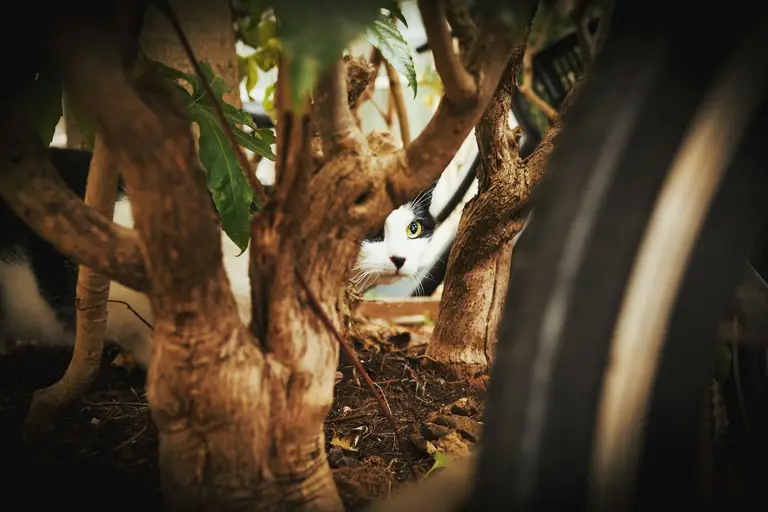
The time of day changes everything
Cats are most active at dawn and dusk. That's when your chances of seeing it leave its hiding spot are highest. Go out early in the morning and at nightfall, when the area is quiet: shake its box of kibble, open a tin of wet food, call it calmly. The quiet carries the sounds, and your cat recognises your voice and familiar noises.
Organise the local search
Beyond your own plot, widen out in concentric circles, but stay close at first. A cat used to going outside knows its territory and usually stays within it.
A few useful moves:
place a bowl, its used litter or a piece of clothing carrying your scent in front of your home: these scent markers help it find its way back;
knock on neighbours' doors and ask permission to check gardens, garages and outbuildings, where a cat can get shut in by accident;
inspect the area's nooks at dusk with a torch: the beam makes cats' eyes shine from a distance;
ask the local children, often very observant, and the people who are out early (postal workers, dog walkers, shopkeepers).
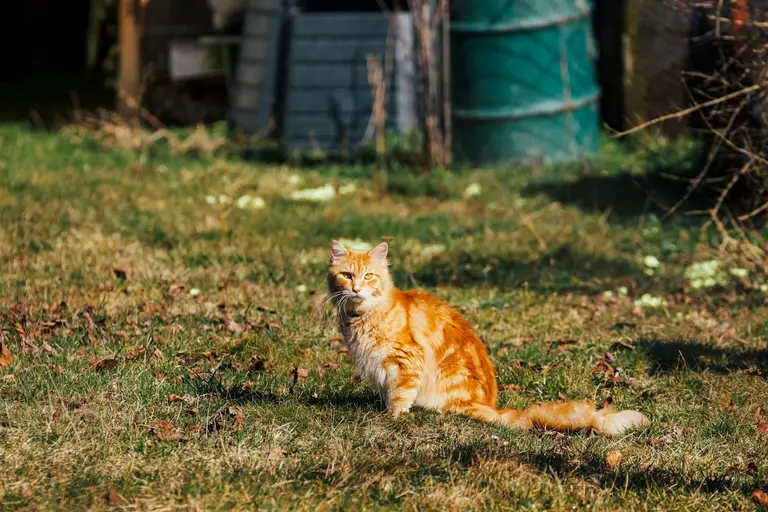
Often it's a neighbour who breaks the case open: they glance into their garage and spot what you couldn't see from the street. The catch is the time it takes to reach everyone, door by door. You can also alert everyone around the spot at once with Animou, a free app that notifies the people near you the moment an animal goes missing, and that lets anyone report what they see: what matters is the number of eyes mobilised quickly, not just the size of the area.
The official steps not to forget
Alongside the search on the ground, a few official reports genuinely raise your chances, and some are mandatory.
Report the loss to the i-CAD registry
If your cat is identified (microchip or tattoo), log in to your account on the national I-CAD registry and report it lost. Check that your phone number and email address are up to date so that an authorised professional who looks up its identification number can contact you. An old phone number can make that contact more difficult. For step-by-step instructions, see our guide to declaring a lost pet to I-CAD.
Contact pounds, shelters and vets
Call the pound in your town and in neighbouring towns, as well as the shelters and the SPA in the area. Give a precise description (colour, coat, size, distinctive marks, whether it wears a collar) and call back regularly, since intakes change every day. Also alert nearby vet practices: an injured cat, or one picked up by a passer-by, is often taken there first.
Notify the town hall
Some towns keep a register of lost and found animals. A visit or a call to the town hall costs nothing and may connect you with someone who has taken your cat in.
Spread the word: posters and listings
An effective poster can be read in two seconds, from a distance. Go for clarity over text.
A good poster has:
the word LOST in large, very visible letters;
a sharp, recent colour photo where the cat is easy to recognise;
the area where it went missing and the date;
a phone number in big characters;
a discreet mention of a reward if you wish, without stating an amount.
Put these posters up around the spot where it disappeared (shops, bakery, vets, schools, bus stops, building noticeboards) and slip a smaller version into nearby letterboxes. Share the listing too on local help groups and neighbourhood pages: a photo, an area, a contact are enough.
My cat has been missing for several days: should I give up?
No. Many cats come back or are found after several days, sometimes several weeks. A cat that doesn't come home may have got stuck somewhere, been fed by a well-meaning neighbour, or simply be waiting for the commotion to die down before coming out.
Keep the rhythm: keep going out morning and evening, keep the bowl and scent markers outside, call the pounds and shelters back every two or three days, and refresh your listings. The more time passes, the more the search area can widen, but never neglect the close perimeter: that's where most reunions happen.
If it's a dog that has run off rather than a cat, the steps differ on several points: we cover them in our guide my dog ran away: what to do in the first 24 hours. And if you are on the other side of the situation, having come across a cat that is not yours, see found or stray cat: what to do.
In town or in the countryside: where to look
The setting changes the zone. In town, the cat takes refuge in cellars, car parks, garages and backyards: a tight perimeter, but plenty of closed-off hiding spots. In the countryside, it can travel further along a hedge or a ditch, and end up in a barn or a neighbouring outbuilding. Either way, don't set a deadline: a cat can survive for days, sometimes weeks outside, and many reappear well after the first 48 hours.
The mistakes that waste precious time
A few reflexes, understandable in a panic, lower your chances:
Shouting while you search: a frightened cat freezes even more.
Only searching during the day: dawn and nightfall are far more effective.
Giving up after two days: it's often beyond that point that it comes out of hiding.
Widening the area too fast: most cats are very close by.
Forgetting to update your i-CAD contact details.
Paying a so-called ransom: messages demanding money are almost always scams.
How to prevent the next disappearance
Once your cat is back, a few precautions cut the risk of it happening again:
Have your cat identified (microchip): it's mandatory in France and it's the most reliable way to get it back if it strays.
Keep your i-CAD details up to date, and add an engraved tag with your number.
Secure the exits where possible (window screens, balcony netting). For an indoor cat, a stimulating environment reduces the urge to escape.
Keep a recent, sharp photo ready to share: it's the first tool of an effective search.
Frequently asked questions
How long does a lost cat take to come back?
It varies a lot. Many cats come back within 24 to 48 hours, especially if they're used to going out. Others reappear after one or two weeks. A lack of quick return doesn't mean it's lost for good: keep up the searches and reports over time. We set out what the available data can and cannot tell you in how long can a lost cat survive.
Is my cat really hiding very close by?
Most often, yes, especially a cat not used to the outdoors. Frightened, it holes up somewhere dark and quiet, sometimes only a few metres away, and only moves out in the calm of early morning or night. Focus your first searches on the immediate perimeter.
What should I do first when my cat doesn't come home?
Search your home and its immediate surroundings first, then go out and call it gently at dusk with its bowl. In parallel, report it lost on the i-CAD registry if it's identified, alert the neighbours, and contact the pound, shelters and vets in the area.
Does identification really make a difference?
Yes. A registered microchip or tattoo allows an authorised professional to look up the keeper's contact details. Keep those details up to date. If your cat is not identified, local searches, posters and contacting nearby vets, shelters and the municipal pound remain essential.
Can an app really help find a lost cat?
Yes, provided it does the right thing: alert the people physically near the spot, straight away. As we've seen, most cats are found within a small perimeter: what counts is the number of eyes mobilised quickly in the right area. That's exactly the principle of Animou, a free app that alerts the residents around you as soon as an animal goes missing, and that lets anyone report a sighting. It complements the classic steps (i-CAD declaration, neighbours, posters), it doesn't replace them: it's the whole that raises your chances.
Should I offer a reward?
It's possible and sometimes helps motivate the search, but it isn't essential. If you do, simply mention the word reward on your listing, without stating an amount, to avoid malicious approaches.
